
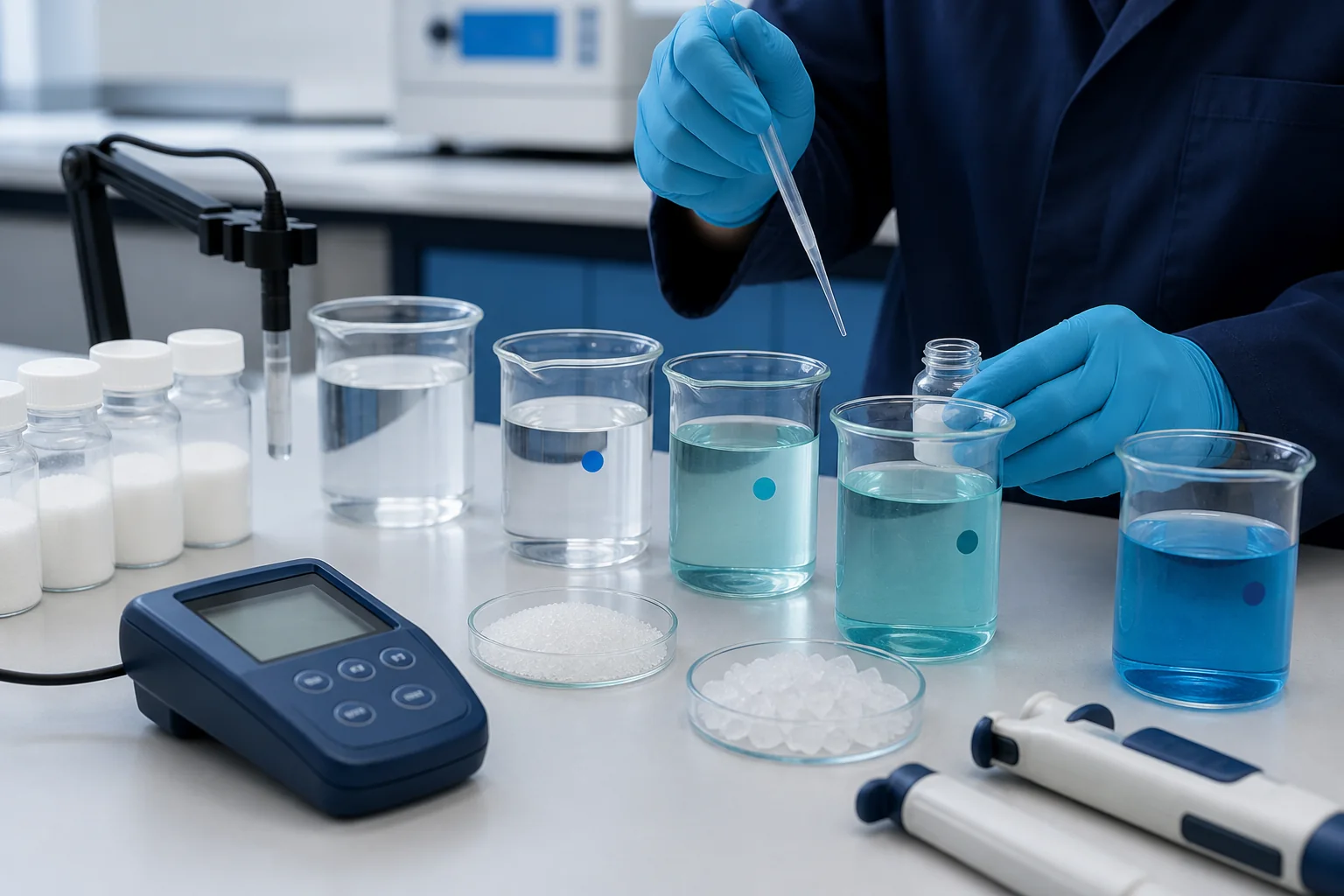
Order samples for the intended reuse route
Specify whether the candidate will contact untreated produced water, treated reuse water or a freshwater blend. Identify the sampling point and the expected treatment upstream of polymer addition. These are different evaluation duties, even when the supply request uses the same phrase, produced-water friction reducer.
The reuse-water application review should anchor the shortlist. Limit the first panel to candidates with an explained reason for inclusion rather than ordering many nominally different products that cannot be compared within the available sample volume.
Create a water matrix before shipping
Select a normal operating blend and a difficult credible blend from actual data. Include the base water used for the incumbent reference. Preserve the source analysis and blend recipe so later tests can reproduce the matrix rather than relying on the sample's informal name.
Record collection date, temperature, storage, mixing and visible settling. Ask the evaluating laboratory for suitable collection and transport instructions. Changing oil, solids or precipitation during shipment can produce a different test fluid, so report the received condition instead of silently treating it as the original field water.
Keep chemical identities and codes traceable
Request the supplier's grade and lot identity behind each blinded laboratory code. Keep the code key with a responsible reviewer and retain sealed material where feasible. The panel should include the incumbent and a water blank, not just new candidates competing without an operating reference.
Document formulation type and active basis separately from the code. Equal product volumes are not automatically equal polymer additions. Use the activity specification guide when the comparison mixes emulsion, aqueous concentrate or dry product.
Sequence tests to preserve scarce water
Begin with visual preparation and compatibility observations under the agreed procedure, then proceed to timed flow-loop comparisons. Allocate water for repeats at the decisive conditions. A single run at every possible dose may provide less decision value than repeated comparisons around the proposed operating window.
Keep preparation age, temperature, rate, geometry and sensor settings common. If a loop recirculates, record elapsed exposure and the procedure between candidates. Carryover or cumulative mechanical history must not be mistaken for a product advantage.
Define results that can support purchase
Require the early and later pressure trace, actual addition, reference performance and observations affecting use. Separate pass, conditional pass and fail. A conditional result should name the control required, such as a particular dilution-water source, blend limit or addition sequence.
Do not use improved pressure response as evidence that the reused water meets discharge, reservoir or environmental requirements. Those are separate operator decisions. The purchase record should describe exactly which hydraulic and compatibility questions the sample panel answered.
Translate the panel into a controlled trial
Choose the smallest useful follow-up panel and connect the selected code to the proposed supply identity. State which water envelope, equipment path and additive program still need field confirmation. Agree what new sample or test is required if the produced-water composition changes before the trial.
Send water analyses, available sample volumes, blend recipes and trial timing through the produced-water sample request. Keep technical screening separate from a claim of universal brine tolerance or a guaranteed reduction in field pumping cost.